Vietnam, a country with a rich cultural heritage, has a fine arts scene deeply intertwined with its history. From the influence of Confucianism to the impact of wars and colonization, the development of Vietnamese fine arts is a compelling story. Let’s explore the fascinating world of Vietnam’s artistic heritage and its enduring legacy.
The Early Years: Dong Son Culture and Chinese Domination
Vietnamese fine arts trace their roots back to the ancient Dong Son Culture, characterized by the use of bronze and other metals. However, the thousand years of Chinese domination from 111 BC to 938 AD suppressed the once-thriving art scene. It wasn’t until the late 10th century, with the rise of Le Dai Hanh, that Vietnamese Fine Arts began to resurface.
The Golden Era: Ly – Tran – Ho Dynasty
The period from the 11th to the early 15th century marked a golden era for Vietnamese fine arts. Under the influence of Buddhism, magnificent architectural marvels such as the One Pillar Pagoda in Hanoi emerged, adorned with intricate dragon and phoenix contours. It was also a time when folk paintings flourished, reflecting the creative spirit of the peasants during times of peace. Regrettably, this artistic apex lasted only 400 years before political instability once again plagued the country.
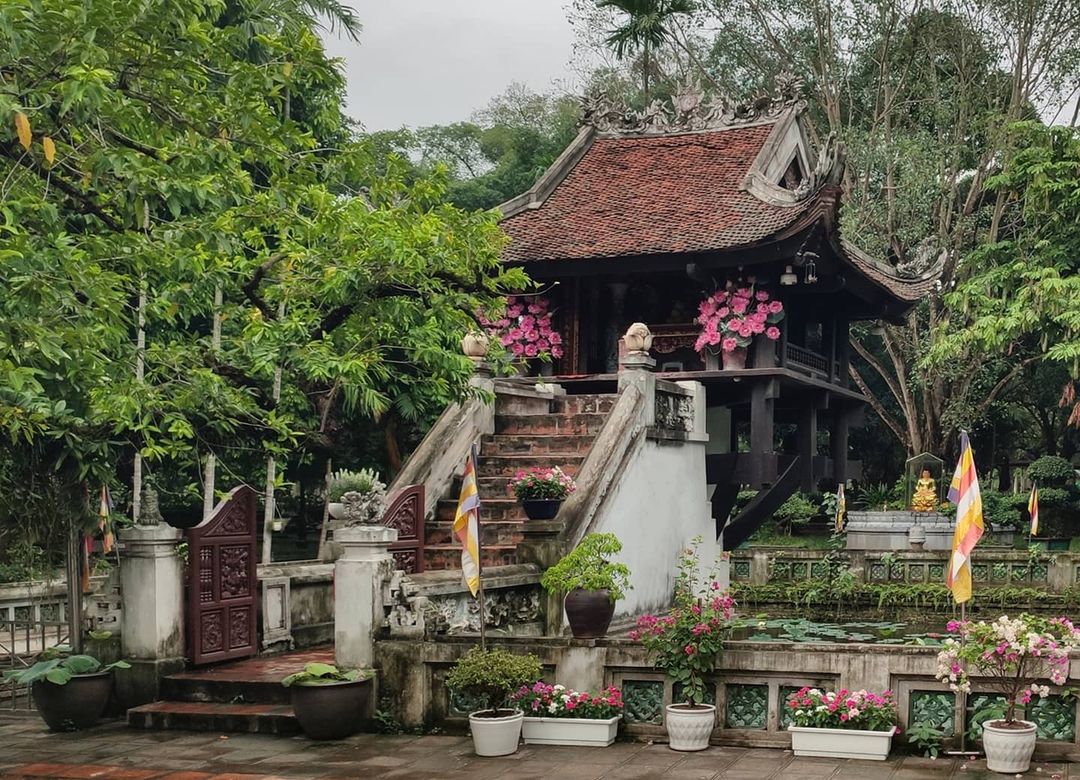
Hanoi One Pillar Pagoda – a typical architectural masterpiece of the Ly dynasty with Buddhist influences.
The Influence of French Colonization
During the French colonization period, Vietnamese fine arts witnessed a significant transformation. Artists, while still influenced by feudalism, sought new avenues of expression and reflected the contemporary capitalist society. This era gave birth to new art forms, one of which was lacquer painting, a proud symbol of Vietnamese culture that continues to thrive today.
The Vietnam Academy of Fine Arts
The Vietnam Academy of Fine Arts, formerly known as the Fine Arts College of Indochine, played a pivotal role in shaping the landscape of contemporary Vietnamese fine arts. This institution, located in Hanoi, has nurtured many talented artists who have left an indelible mark on the country’s artistic legacy. Artists like Tran Van Can, Bui Xuan Phai, and To Ngoc Van combined the simplicity of Vietnamese culture with Western color techniques, ushering in a new era of artistic expression.
Exploring Vietnamese Fine Arts
To delve deeper into the captivating history of Vietnamese fine arts, a visit to the Fine Arts Museum in Ho Chi Minh City and Hanoi is highly recommended. These museums offer a comprehensive journey through time, showcasing the evolution of Vietnamese art and the cultural influences that shaped it.
Travel Guide: https://honuicoc.net
Join us as we embark on a journey through Vietnam’s fine arts scene, where every brushstroke tells a story, and every masterpiece captures the essence of a nation.