In Vietnamese culture, there is a fruit that takes center stage on every Tet holiday. It’s the pomelo – a citrus fruit that holds both delicious flavors and deep symbolism. Representing perfection and completeness, the pomelo has become an integral part of Vietnamese traditions, evoking childhood memories and inspiring verses and songs.
Varieties of Pomelo in Vietnam
Pomelos in Vietnam are often named after the provinces where they are found or planted. Let’s explore some of the most popular types:
Nam Roi: Vinh Long Specialties
This pomelo variety, known as Nam Roi, hails from Vinh Long province. Resembling a pear in shape, it has a hollow center and a rough yellow skin when ripe.

Green Skin (Da Xanh): A Ben Tre Discovery
Discovered in Thanh Tan commune, Mo Cay district, Ben Tre province, the Green Skin pomelo gets its name from its distinctive characteristic. Even when ripe, the fruit’s skin remains green, while the center turns pink.
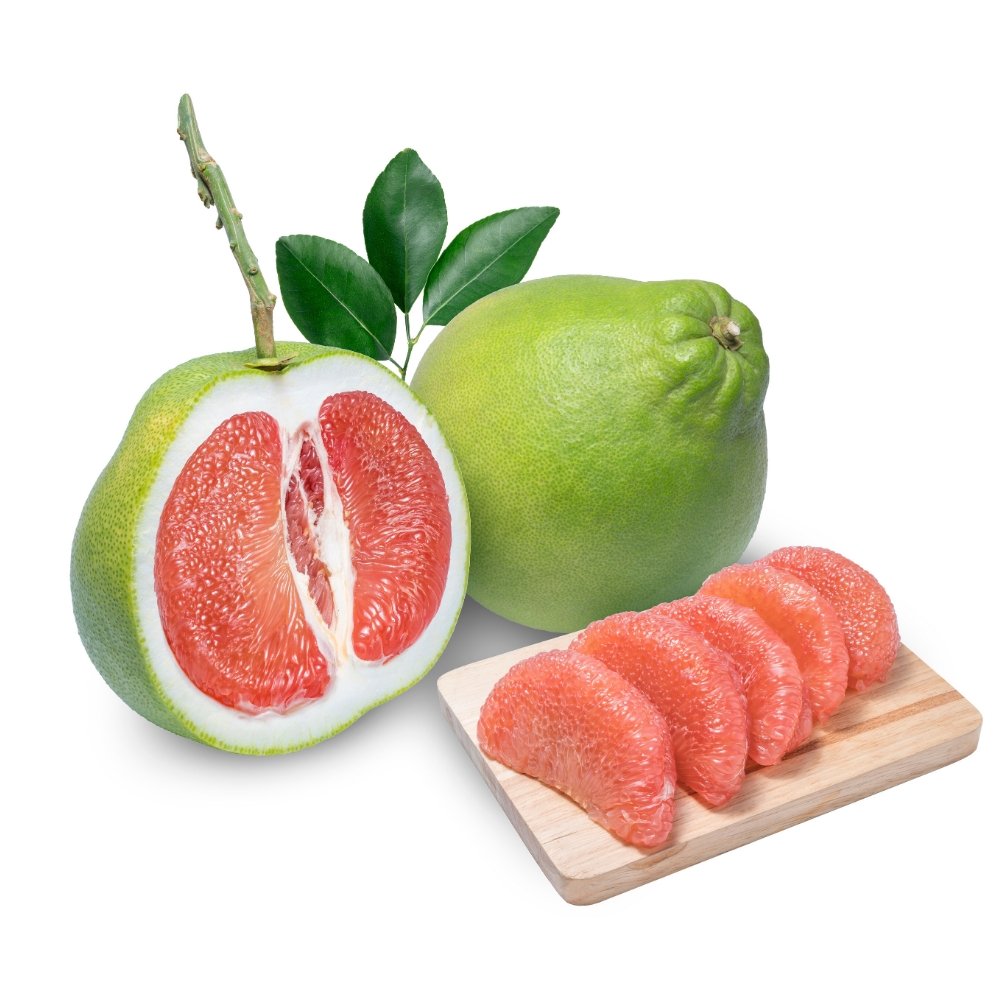
Doan Hung: A Phu Tho Delicacy
Doan Hung pomelo, grown in Phu Tho province, captivates with its thin, yellow skin when fully ripe. The flesh of the fruit boasts a delightful yellowish hue and a sweet taste.

Dien: Eye-Catching and Sweet
Deriving from the sweet pummelo Doan Hung, the Dien pomelo is grown in Phu Dien commune, Tu Liem, Hanoi. When ripe, this fruit stands out with its thick, sweet citrus and acts as a local specialty.

Phuc Trach: A Delicate Taste
The Phuc Trach pomelo, planted in Huong Khe, Ha Tinh, boasts a slightly flat shape. Its ripe skin is thin, yellow, and the fruit’s flesh offers a dry texture with a delicate taste.
Savoring the Pomelo
Pomelo is not only nutritious but also refreshingly delicious. However, peeling and enjoying this fruit can be daunting for foreigners and even locals. Follow these steps to savor the sweet and sour taste of Vietnamese summer fruit:
- Start by cutting off the top and bottom of the pomelo using a knife.
- Carefully slice along the sides, close to the center, until the inner layer peels away.
- Separate the citrus into individual pieces and remove the silk-like skin to reveal the juicy goodness within.
Pomelo’s Growth Across Vietnam
Pomelo cultivation in Vietnam varies depending on the type of pomelo. For instance, the renowned Nam Roi pomelo thrives in several southwestern provinces, particularly Vinh Long. This delightful fruit is nearly seedless, juicy, and exquisitely sweet with a mild acidity flavor. The Green Skin pomelo, originally grown in Cho Lach, Ben Tre, has been successfully replicated across the Mekong Delta, providing Vietnamese farmers with a significant source of income. Additionally, there are other varieties such as Dien pomelo, mainly planted in Cau Dien district, and Phuc Trach pomelo, grown in Ha Tinh province.
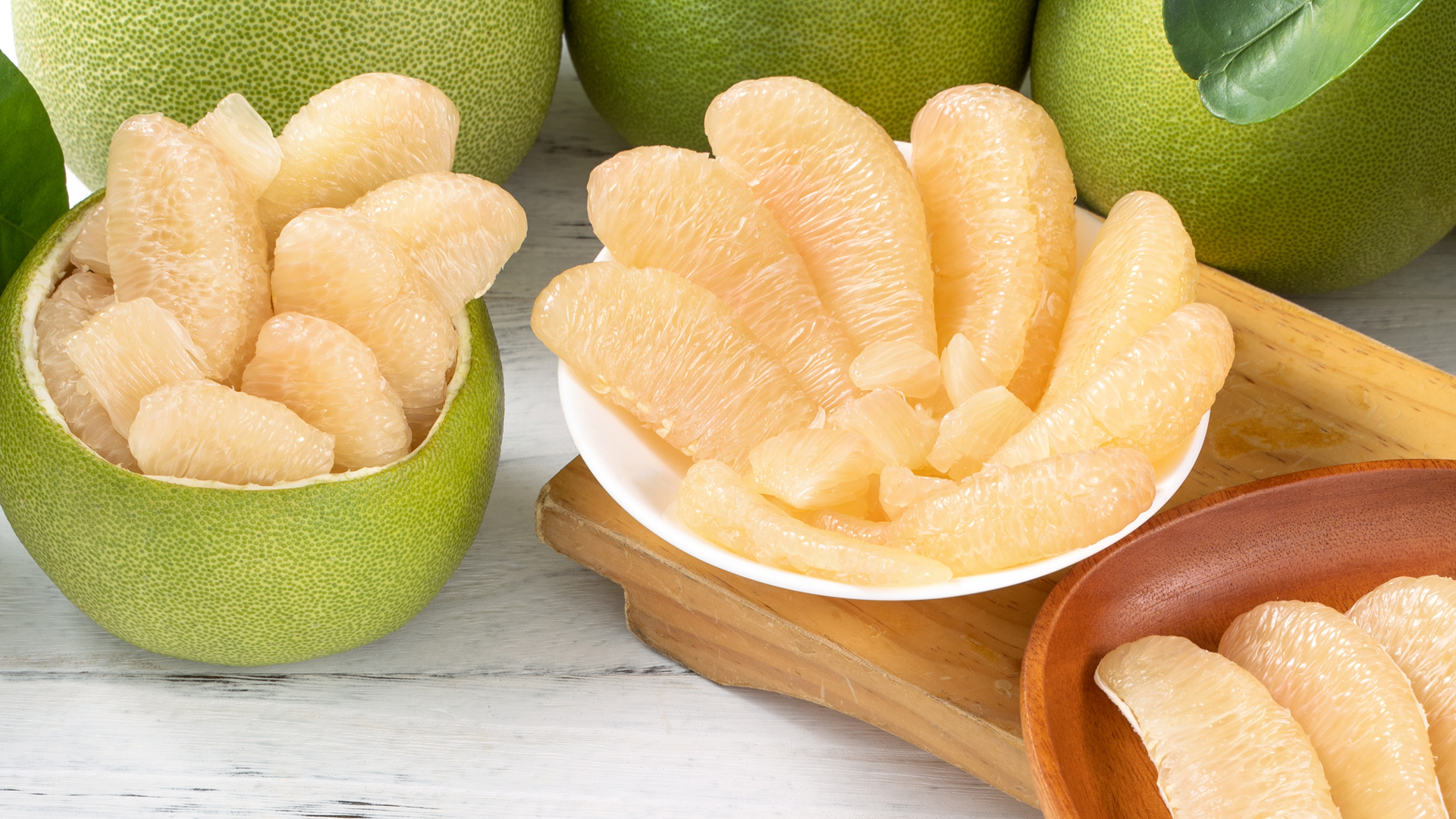
The Health Benefits of Pomelo
Pomelo goes beyond being a delightful dessert fruit; it also offers numerous health benefits. These citrus fruits, with their high vitamin C content, provide a refreshing burst of energy with a single bite. Every part, from the flowers to the leaves and pulp, can be used to create medicine, delicious and nutritious foods, as well as drinks and sweet desserts that are beloved in Vietnamese cuisine.

Moreover, Vietnamese women traditionally dry pomelo peels under the sun and then boil them with hot water to create a shampoo that smooths and untangles hair, leaving it silky and healthy.
Pomelo: A Versatile Ingredient
The heavenly pomelo serves a myriad of purposes, including aiding weight loss, boosting digestion, and enhancing beauty. It is widely used to create various snacks and drinks that have won the hearts of the Vietnamese people over the years. Smoothies, juices, jams, and savory sauces all benefit from the unique flavor of pomelo.
One of the most famous dishes made from pomelo is Che Buoi, a signature Vietnamese dessert. Just one spoonful transports you to a sweet and creamy world, evoking childhood memories and capturing the essence of Vietnamese village life.
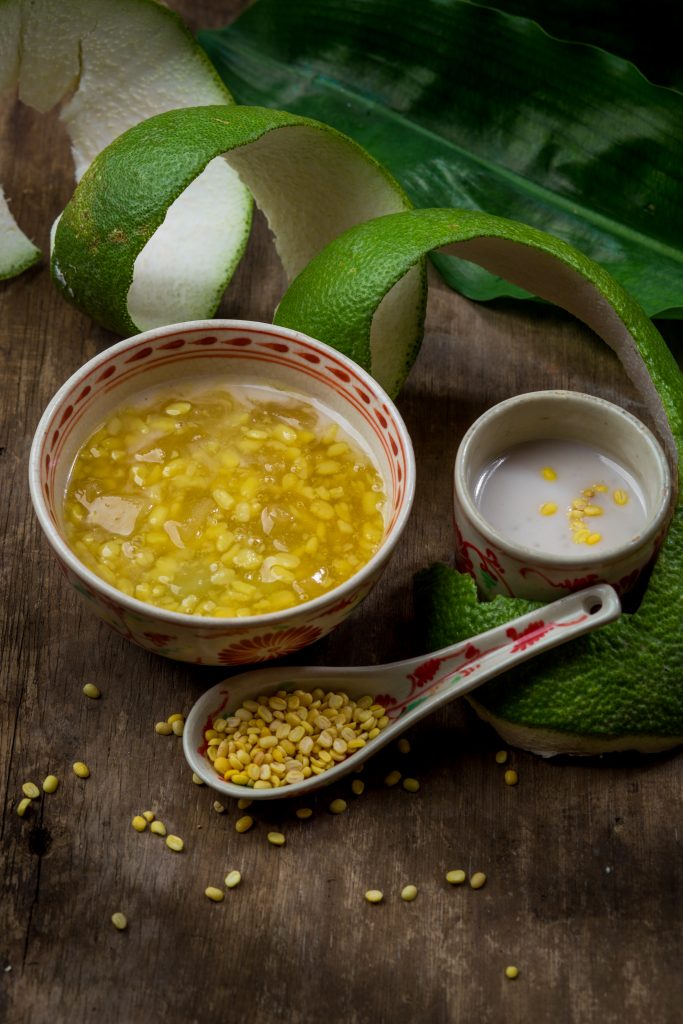
On Vietnamese New Year’s Day, homeowners delight their guests with pomelo jam, which not only offers a delectably sweet flavor but also helps relieve coughs and sore throats – a tasteful Vietnamese medicine.
Learn more about Vietnamese traditions and explore the culinary world of Vietnam with our Travel Guide!