When it comes to healthy diets, fish is a go-to choice for many. Not only is it a protein-packed food, but it also has fewer calories compared to other meat sources. Moreover, fish is incredibly versatile and can be prepared in various ways. From baking and frying to steaming and poaching, the options are endless. However, if you want to enhance the flavor and reduce the fishy smell, simmering is the way to go.
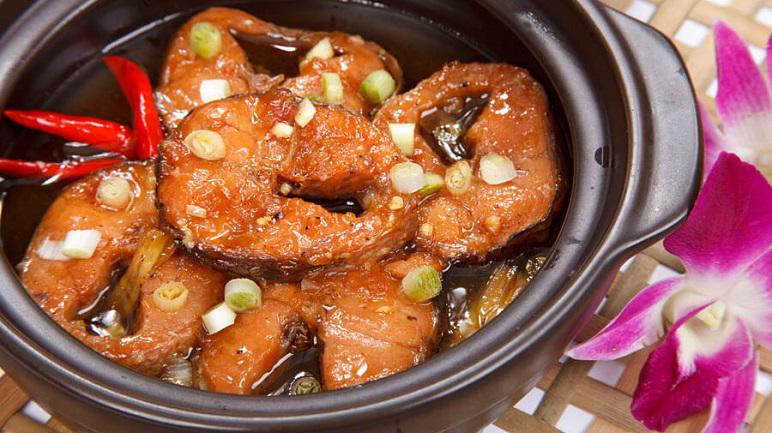
In Vietnam, there are two types of “ca kho” or caramelized fish: “kho khô” (dry simmering) and “kho nước” (simmering in water). “Kho nước” is typically made with sea fish like tuna, salmon, mackerel, and grouper. It has a mild taste and is often cooked with plenty of water that can be used as a sauce for steamed rice, bún (rice vermicelli), or noodles. On the other hand, “ca kho khô” is saltier and cooked until almost all the water evaporates. Freshwater fish like long-jawed anchovy, carp, goby, and mullet are commonly used for this type of dish.
To make a delicious “ca kho” in either variation, it is important to carefully prepare the ingredients. The seasoning includes salt, pepper, “nước mắm” (fish sauce), sugar, and a touch of “kẹo đắng” or caramel syrup. This syrup, made from well-cooked sugar, adds a slightly bitter taste and a beautiful dark reddish-brown color to the dish. Additionally, you can add some vegetables, known as “phụ gia,” such as ripe pineapples, tomatoes, carambola, jackfruit, and even chunks of sugar cane. Of course, the star of the show is the fish itself. Opt for fresh fish to ensure the best taste. Remove the scales, wash it thoroughly with water and vinegar, and chop it into small chunks.

After preparing the fish, marinate it with the spices and vegetables for about 30 minutes before cooking. Then, transfer the mixture to a pot, preferably a clay pot, as it enhances the flavors. Fill the pot with water and add a small cup of tea. Simmer the pot for several hours, adjusting the heat as needed. It is crucial to keep the water level above the fish, ensuring it stays submerged by about 1-2 centimeters. Continue simmering until the fish is well-done and the desired level of water is achieved. For “ca kho nước,” a generous amount of sauce is left in the pot, while “ca kho khô” has only a small amount of remaining liquid.
“Cá kho” is typically served with steamed rice or “bún.” The best part? It can be stored for up to a week, allowing you to enjoy its flavors over several meals.
So, why not treat yourself to the enticing taste of caramelized fish? Discover the delightful flavors of Vietnam with Travel Guide. Travel Guide