Calligraphy has been an integral part of Vietnamese culture for centuries, evolving and adapting along the course of history. Today, it stands as a stunning blend of ancient traditions and contemporary influences. Let’s take a closer look at the captivating world of Vietnamese calligraphy.
A Glimpse Into Vietnamese Calligraphy
In Vietnamese, calligraphy is known as “Thu Phap,” a term that combines “Thu” meaning script and “Phap” meaning rule, signifying “the rule of writing.” Over time, Vietnamese calligraphy has transcended its role as a mere rule of beautiful writing, blossoming into an art form that breathes life into every stroke.
Unlike Western calligraphy, which relies on various precise tools like pens, rulers, and compasses to achieve proportional accuracy, Vietnamese calligraphers embrace a minimalist approach. With brushes and black ink as their only companions, they uncover the inherent beauty and philosophical depth hidden within each character.
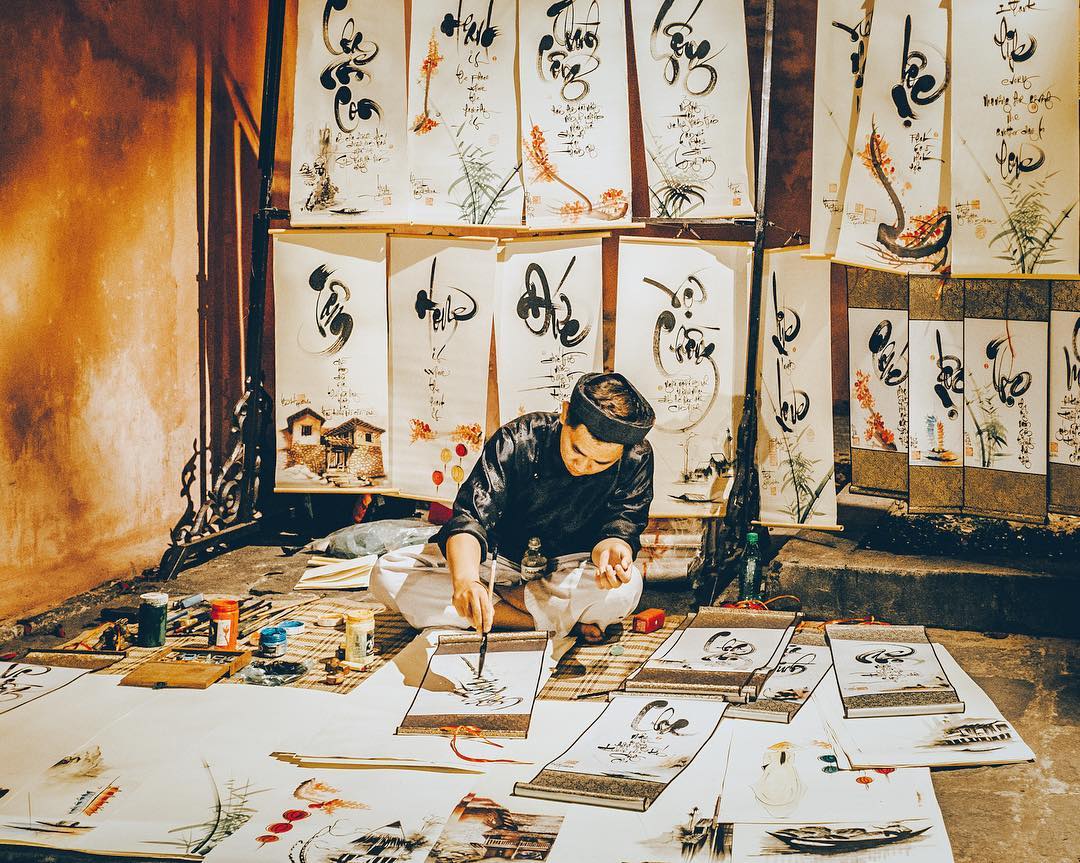
Han-Nom Calligraphy – The Classical Calligraphic Stream
When one thinks of calligraphy, China, the birthplace of this art form, often comes to mind. And rightly so, as Vietnamese calligraphy bears strong traces of its Chinese counterpart, owing to historical cultural exchanges and geographical proximity. Vietnamese calligraphy adheres to Chinese calligraphy standards and employs the Han script in many instances.
However, the richness of the Vietnamese language found its expression in Nôm script, which eventually replaced the Han script in Vietnamese calligraphy. This distinction sets Vietnamese calligraphy apart from that of China, giving rise to the classical calligraphic stream known as Han-Nôm. Although Hán and Nôm calligraphy share similarities in terms of writing style, character shapes, tools, and paper types, Nôm calligraphy delves into the depths of human emotions, focusing on virtues, rights, beauty, dreams, and everyday inspirations.
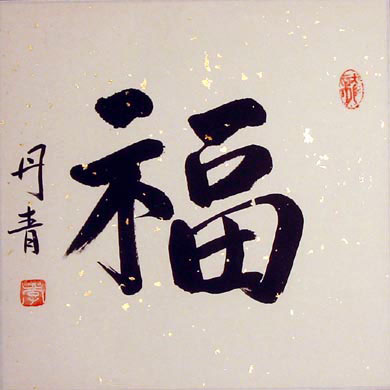
Driven by their relentless pursuit of artistic excellence, Vietnamese calligraphers continue to enrich this art form by introducing two more calligraphic streams: modern Vietnamese script calligraphy and “Tiền Vệ” (Zenei shodou) calligraphy.
Modern Vietnamese Script Calligraphy
During the last decade, modern Vietnamese script calligraphy has emerged as a respectful innovation that preserves the essence of Han-Nôm calligraphy while embracing a contemporary approach. Similar to its predecessor, modern Vietnamese script calligraphy employs brushes, Chinese ink, and white or red paper. However, it expands on writing styles, offering a richer variety for calligraphers to explore.
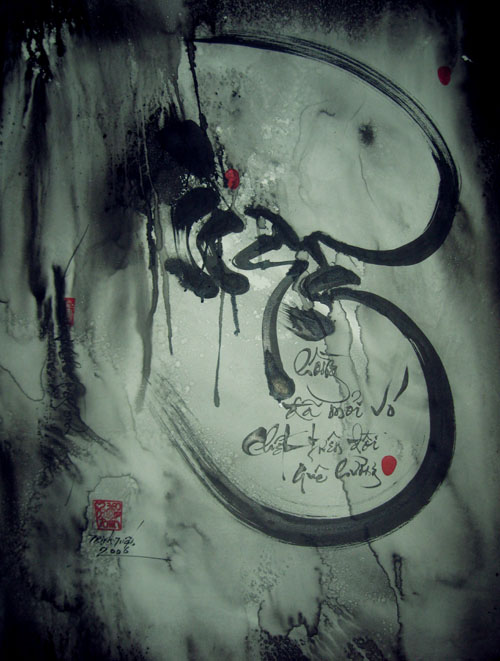
The Advent of “Tiền Vệ” Calligraphy
The latest addition to the Vietnamese calligraphy scene is “Tiền Vệ” calligraphy, brought to Vietnam in 2006 by the avant-garde calligrapher Lê Quốc Việt. Inspired by an art exhibition in China, Việt and his team, known as “The Zenei Gang of Five,” have dedicated themselves to promoting this innovative stream, which has garnered widespread attention.
Interestingly, one does not require an understanding of Han or Nôm to appreciate this art form. Tiền Vệ calligraphy transcends intellectual comprehension, relying instead on emotions and feelings. Blurring the boundaries between painting and calligraphy, it presents itself as an abstract composition, allowing each viewer to interpret it through their unique perspective.
Tiền Vệ calligraphy defies traditional conventions, incorporating various scripts, whether Han, Nom, or Roman, within a single artwork. The arrangement and layout of the writing embrace freedom, featuring multiple layers and sizes of scripts. Moreover, calligraphers venture beyond traditional surfaces, using materials such as paper, glass, wood, and even the human body as their canvas. Writing tools become even more extraordinary, as calligraphers experiment with unconventional techniques, like allowing a dog or a cat to leave paw prints or nature-inspired imprints.
Lê Quoc Viet’s vision for introducing this new calligraphic stream to Vietnam was to redefine and rejuvenate this lofty art form. By breaking away from tradition, he paved the way for fresh perspectives and boundless creativity, ensuring that Vietnamese calligraphy continues to evolve and captivate future generations.
For more insights on travel destinations and cultural experiences, check out our Travel Guide.