Did you know that you don’t have to be a child to be entertained by water puppets? Vietnam’s water puppetry is a captivating art form that opens a window into local culture and is enjoyed by people of all ages. With scenes depicting village life, festivals, and quirky Vietnamese personalities, water puppets are truly a unique experience. Here’s a brief introduction to Vietnam’s wonderful water puppets.
A short history
Water puppets have a long and fascinating history in Vietnam. About one thousand years ago, during the annual rice harvest, farmers in the Red River Delta region would come together for folk singing and dancing at village festivals. Water puppets were later introduced as a performance during these festivals, with the first shows taking place in harvested rice fields that were transformed into watery stages.
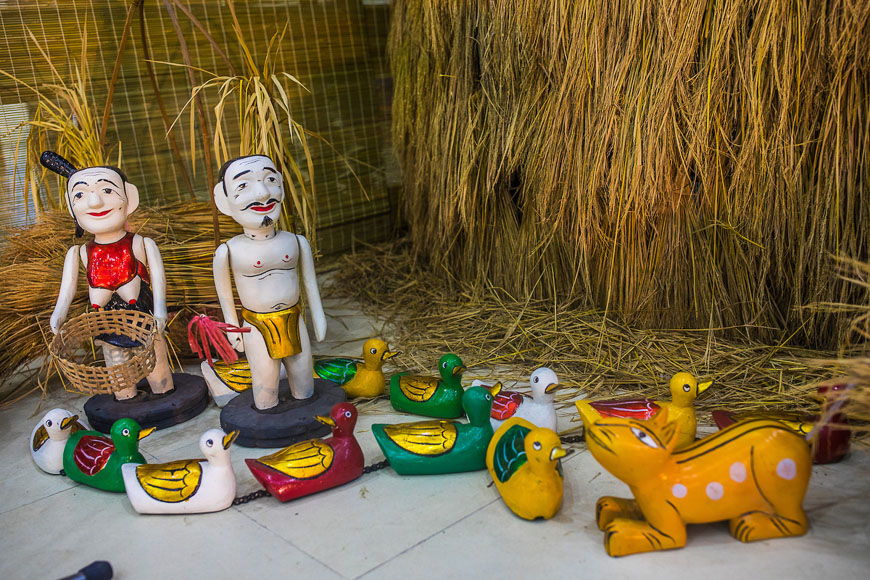
Over time, water puppetry evolved from serving everyday people to becoming a show for royalty. During the 12th century reign of the Lý Dynasty, the country’s best water puppet troupes were chosen to entertain the king and his guests, elevating the art’s social status. Today, water puppetry, known as “múa rối nước,” continues to mesmerize audiences and is considered a cherished intangible cultural heritage of Vietnam.
Setting the stage
Water puppetry is a physically demanding craft. Puppeteers stand in water throughout the show, using the movement of the water to create drama and tell a story. The puppets themselves are made of buoyant fig wood and painted with lacquer, allowing them to float effortlessly. Puppeteers skillfully maneuver the puppets’ arms using bamboo sticks and strings, a skill that takes decades to master.
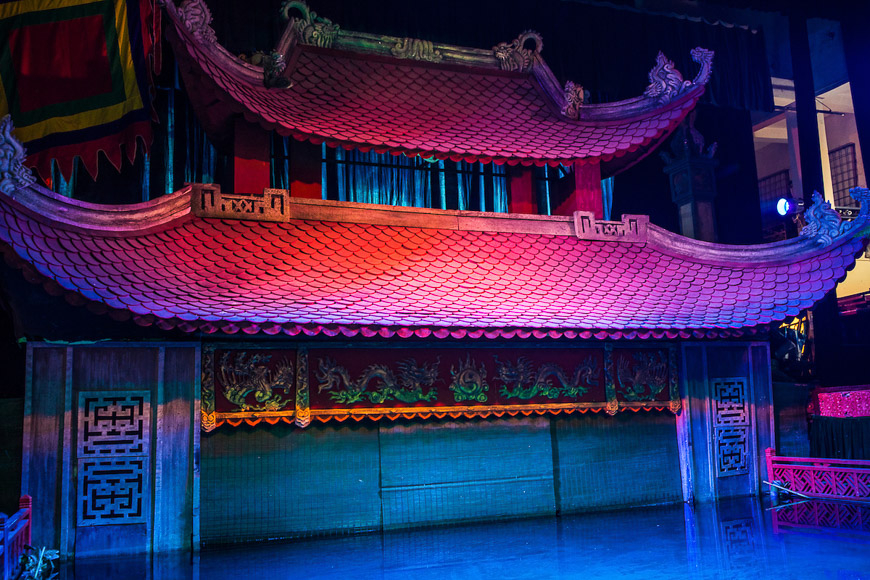
In modern times, water puppet shows are no longer presented in flooded rice paddies but in pools of water. These pools are adorned with red tiered roofs, flags, and parasols to resemble altars inside Vietnamese communal houses. On either side of the stage, the musical ensemble brings the stories to life through their voices and traditional instruments.
A water puppet show
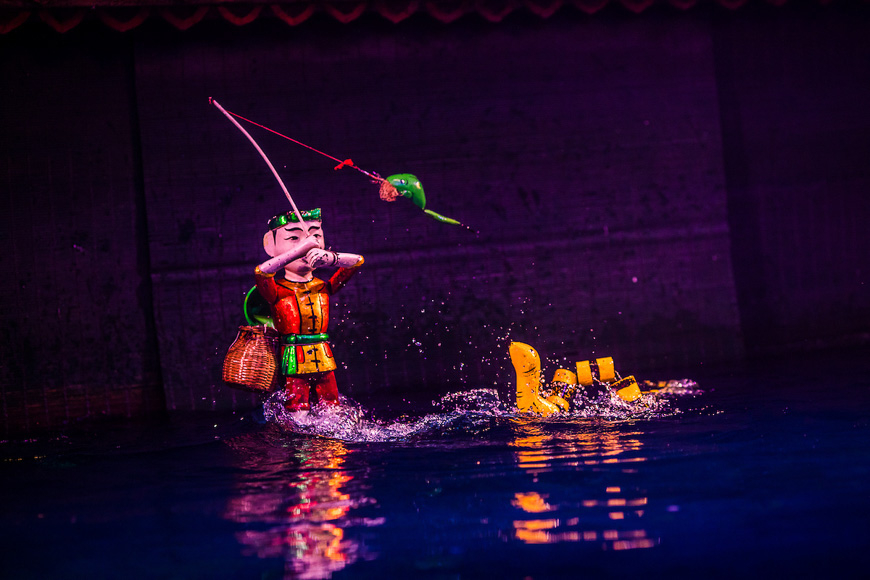
A traditional water puppet show always starts with an introduction to Tễu, the comedic host. Tễu is an iconic character, a whimsical storyteller who guides the audience through different scenes and stories that unfold on the stage. The brightly colored puppets recreate daily life in northern Vietnamese villages, including activities such as duck herding, fishing, rice planting, boat rowing, and royal parades. Some shows also depict Vietnamese folktales, each carrying a moral lesson.
Where to watch
For a deeper understanding of Vietnamese water puppets, a visit to Đào Thục Village on the outskirts of Hanoi is recommended. Here, you will find one of the last remaining water puppet workshops in Vietnam, where you can learn about the making of the puppets. The village also hosts fantastic shows on a beautiful outdoor stage, keeping alive the 300-year-old tradition.
Within the cities, several water puppet theaters present both traditional and modern performances. Here are some of the best places to enjoy a water puppet show across the country:
- Thăng Long Water Puppet Theatre – 57B Đinh Tiên Hoàng St., Hoàn Kiếm District, Hanoi
- Vietnam Puppet Theatre – 361 Trường Chinh St., Thanh Xuân District, Hanoi
- Hội An Theatre – 548 Hai Bà Trưng St., Hội An
- Huế Water Puppet Theatre – 8 Lê Lợi St., Vĩnh Ninh District, Huế
- Golden Dragon Water Puppet Theatre – 55B Nguyễn Thị Minh Khai St., District 1, HCMC
- Museum of Vietnamese History (outdoor) – 2 Nguyễn Bỉnh Khiêm St., District 1, HCMC
If you’re planning a trip to Vietnam, don’t miss the opportunity to witness the magical art of water puppetry. It’s a unique and immersive cultural experience that will leave you captivated. Sign up for our newsletter to receive more travel ideas and the best stories from Vietnam. Travel Guide