If you’re a fan of sticky rice, then you’re in for a treat with “Xôi Vò”. This unique Vietnamese dish takes sticky rice to a whole new level. Unlike other types of Xôi, “Xôi Vò” is not sticky in the traditional sense. Instead, the grains are delightfully crumbly, completely coated with well-kneaded yellow mung bean. Join me in exploring the art of making this mouthwatering delicacy and discover what makes “Xôi Vò” so special.
About “Xôi Vò”
While sticky rice is a staple in Vietnamese cuisine, “Xôi Vò” stands out for its distinctive texture. Instead of the usual stickiness, the rice is covered in a layer of perfectly kneaded mung bean. This unique combination of flavors and textures makes “Xôi Vò” a beloved dish in Vietnamese tradition.

The Art of Making “Xôi Vò”
The name “Xôi Vò” itself hints at the meticulous process of making this dish. In Vietnamese, “Vò” means squeezing hard, which perfectly describes the effort that goes into creating this culinary masterpiece. While it may not be the easiest dish to cook, the incredible taste of “Xôi Vò” is well worth the effort.
The main ingredients for “Xôi Vò” are glutinous rice, mung bean, salt, sugar, and vegetable oil. The secret to a perfect plate of “Xôi Vò” lies in the careful selection and preparation of the rice and mung bean. Both the rice and dehusked beans need to be soaked separately for up to 12 hours. This process ensures that the kernels absorb just enough water while remaining completely dry and crumbly when cooked.
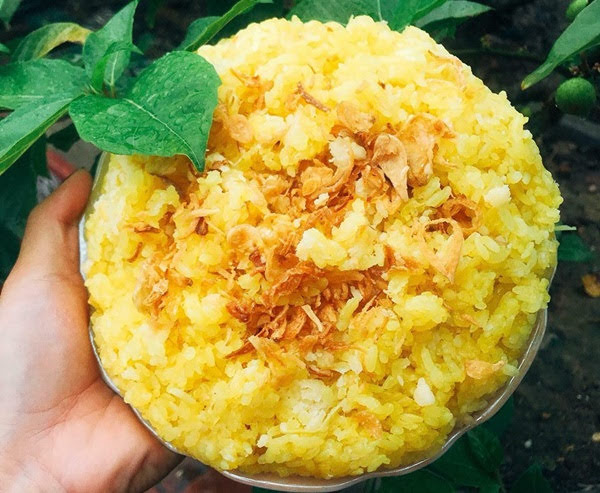
The mung beans are steamed and mashed until they become a powdery consistency. Then, they are mixed with the rice, along with a sprinkle of salt and a drizzle of vegetable oil. The grains of rice are now covered entirely with the granular bean mixture. This addition of well-squeezed steamed mung bean adds a creamy texture and a sweet nutty flavor to the rice. The final touch is steaming the mixture for an additional 20 minutes, resulting in tender and flavorful rice.
After the “Xôi Vò” has cooled off, it’s time to add a touch of sweetness. The cook rolls the rice between their hands, coating it with a layer of sugar. This extra step enhances the overall taste experience, adding a subtle sweetness to complement the combination of flavors.
What Makes “Xôi Vò” So Special?
One of the remarkable aspects of “Xôi Vò” is its versatility. Whether it’s breakfast, lunch, dinner, or supper, this dish can be enjoyed at any time of the day. However, the most popular way to savor “Xôi Vò” is by pairing it with “che hoa cau,” a sweet dessert soup made from tapioca starch, sugar, and water. The harmonious blend of flavors creates a delightful fragrance and an elegantly tender taste.

Xôi Che with Sweet Soup
As a cool dessert, “Xôi Che” combines the best of both worlds – the mung bean coated sticky rice and the sweet soup. It is particularly refreshing during the summer, offering a respite from the heat. With its vibrant yellow color symbolizing prosperity and the abundance of grains symbolizing maternity, “Xôi Vo” holds a special place in Vietnamese culture. It is often seen as a gift from nature, an auspicious offering for new beginnings and a happily ever after.