When it comes to fashion shows, most people may think of glitzy runways in glamorous cities. But in Vietnam, the real fashion show takes place in the highlands, country markets, and small villages, where the country’s ethnic groups showcase their traditional ethnic costumes. Vietnam is home to 54 ethnic minorities, each with their own unique cultural outfits that are more creatively crafted and inventive than any piece of couture. If you are looking for eye-catching ensembles and irreplaceable style, let’s explore a few ethnic groups that you need to know.
Dao Chàm

The Dao people in Vietnam may have many subgroups, but they share a common language, religion, and culture. One of the most striking differences among them is their garments. Dao Chàm, also known as Dao Áo Dài, gets its name from the resemblance of their tunics to the traditional Kinh dress. They wear simple headscarves with embroidery, and their accessories include large, layered silver necklaces and earrings. You can find the Dao Chàm people in the cultural villages of Nặm Đăm in Ha Giang.
Red Dao
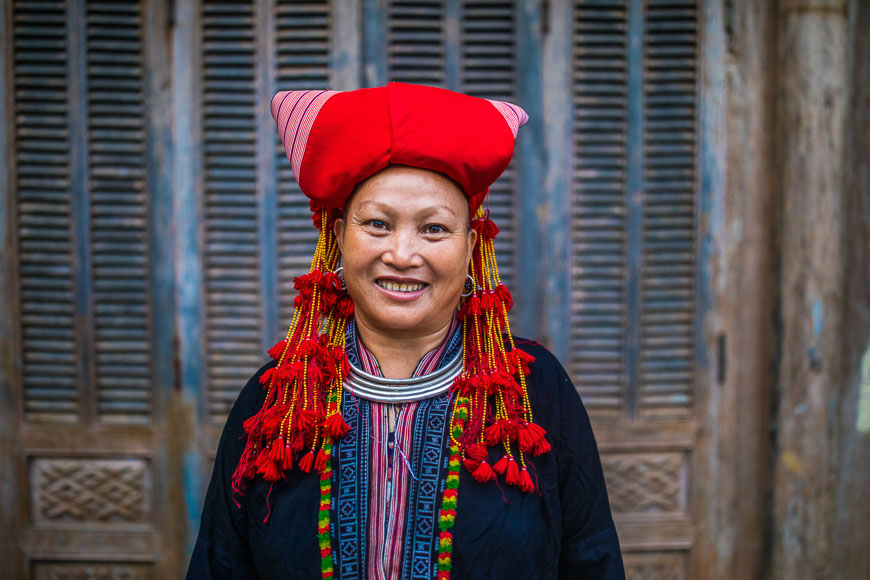
The Red Dao ethnic group stands out with their distinctive clothing. Their attire features red and white borders, intricately embroidered trousers depicting family life and animist symbols, and headdresses adorned with silver studs, coins, and tassels. The Red Dao headdress, especially, catches the eye with its triangular red turban. The bridal headpiece is even more impressive, as it is made from embellished red cloth, draping completely over the bride’s face.
Tay
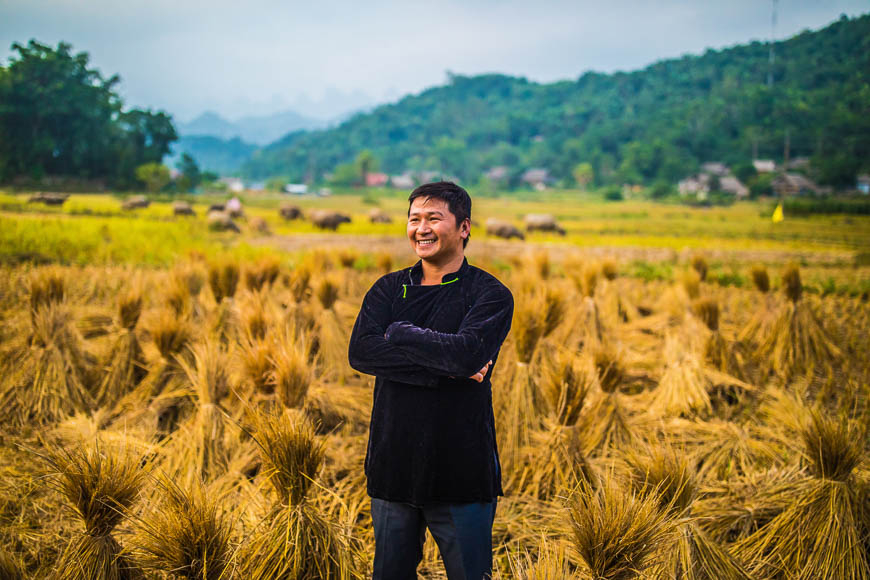
The Tay ethnic group is the second largest in Vietnam, after the Kinh, and can be found throughout the northern region of the country. Their clothing is more humble compared to other minority groups. Simple black velvet or indigo-dyed jackets are paired with pants or skirts. Women often wear an understated silver hoop necklace and a small black velvet headpiece. The jackets may have subtle embroidered details, but they remain modest in design.
H’mong
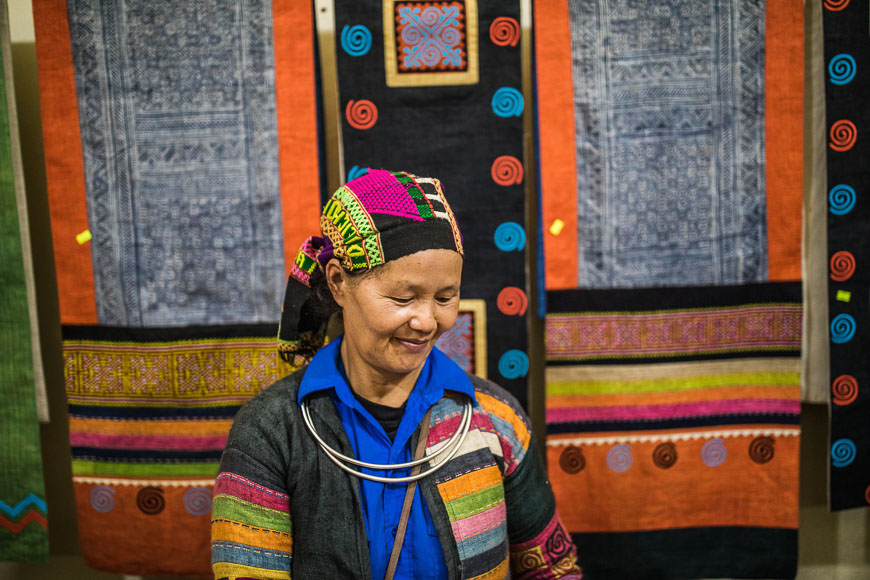
The H’mong ethnic group in Vietnam comprises several subgroups, but their costumes share common characteristics such as handwoven hemp, stitching, dyeing, and embroidery. H’mong women are taught embroidery from a young age and are expected to sew clothing for every family member once married. While White H’mong dress simply with spiral patterns for embellishment, the Flower H’mong are known for their intricate designs, including elaborate reverse applique techniques.
Black H’mong
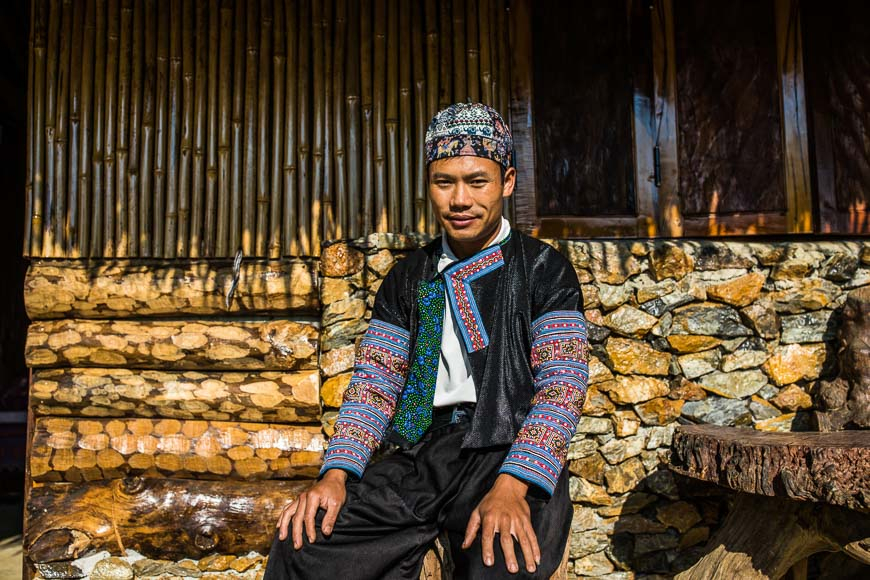
The Black H’mong, a subgroup of the H’mong minority, predominantly reside in the mountainous areas of Northern Vietnam. Their outfits are characterized by shiny, sleeveless jackets made from polished hemp. Elaborate hand-embroidered and cross-stitched sleeves, collars, and belt sashes are coordinated with beeswax batik skirts, showcasing their diverse textile-making skills.
Ede
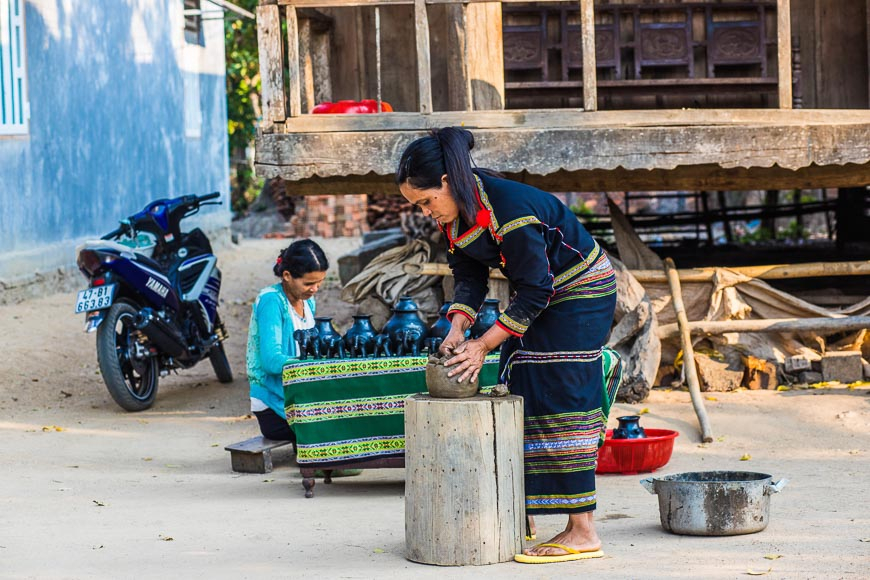
The Ede people, primarily settled in the central province of Dak Lak, boast a striking costume. Women wear boatneck shirts with full sleeves and sarongs wrapped as skirts. The tops feature delicate embroidery along the shoulders and hems, often complemented by gold bells or red pom poms. The fabric of the skirt is woven with horizontal stripes of green, red, blue, and white, enhanced with a touch of gold thread. Men wear loincloths with elaborate floral patterns highlighting their strength.
Cham
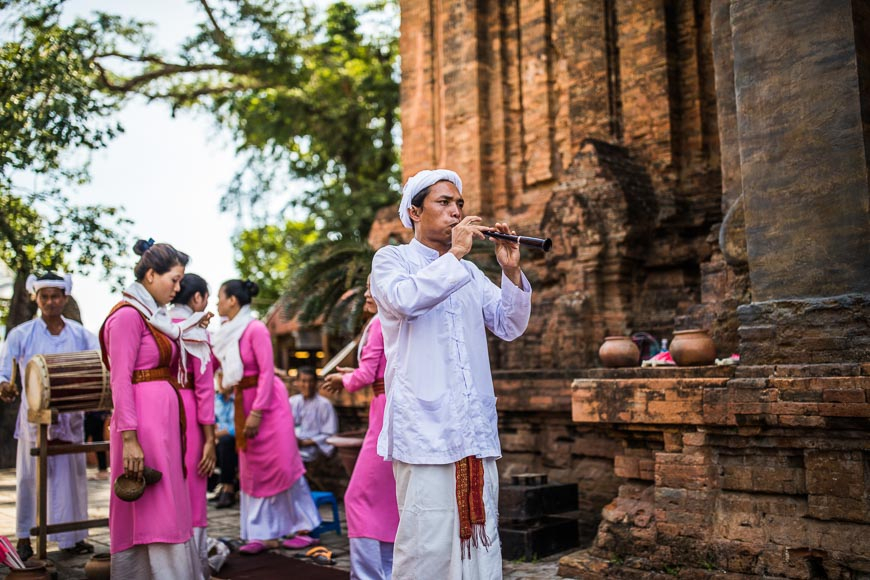
The Cham people in Vietnam reside in the Mekong Delta and small coastal communities. Their dress is predominantly made from cotton in white or blue, with a sarong serving as the base for both men and women. The sarong is knotted at the waist and topped with a tunic. Women’s tunics have a more fitted sleeve design, while men’s tunics are looser. Cham people are known for their beautiful textiles, particularly bold pinks or blues, which are reserved for important rituals and ceremonies.
These ethnic groups in Vietnam preserve their unique cultural identities through their traditional costumes, showcasing their rich heritage and craftsmanship. Exploring these diverse ethnic costumes can be a fascinating way to experience Vietnam’s cultural tapestry.
Want more Vietnam travel ideas? Sign up for our newsletter to receive our best stories in your inbox.