Quan Ho, a traditional Vietnamese folk singing, has captivated hearts for centuries. In the past, it was much more than just a performing art; it was an opportunity for people to connect intimately, blurring the lines between performers and audiences. Money and revenue were never the driving forces behind Quan Ho; instead, it fostered a sense of community and shared passion for traditional art.
Quan Ho In The Past: A Tapestry of Infinite Plays
In its early days, Quan Ho was a cultural activity where people from Bac Ninh and neighboring areas gathered to share their love for this art form. They didn’t “perform” Quan Ho; they played it, satisfying their desire to meet and connect with others who shared the same interests. Festivals, ceremonies, and parties provided the perfect settings for Quan Ho to come alive, allowing both singers and audiences to revel in its unique beauty. Once the occasion ended, they returned to their daily lives, cherishing memories and eagerly awaiting reunions with their Quan Ho friends. Quan Ho served as a means for people to find balance, relax, and free their minds through the enchanting melodies of this traditional art.
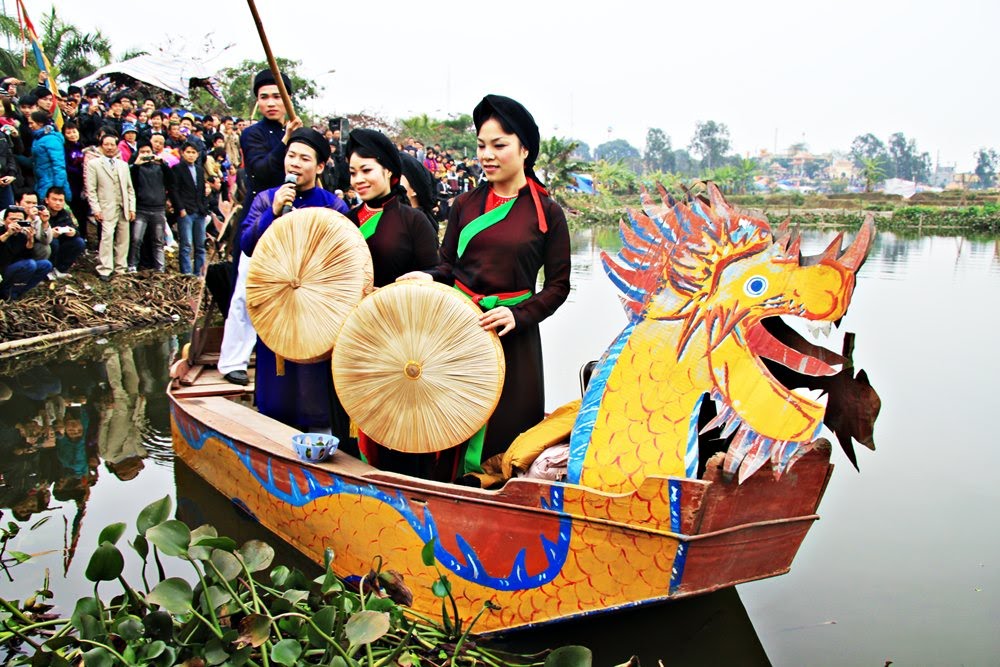
Another remarkable aspect of Quan Ho in the past was the belief that some couples were destined to sing Quan Ho together. This fate brought them closer, creating a unique bond borne out of their shared passion for this enchanting art form.
Quan Ho Today: The Intersection of Professionalism and Commercialism
After years of interruptions caused by wars and the subsequent reconstruction of the nation, Quan Ho was fortunately preserved by the Kinh Bắc people and reemerged in a fresh, revitalized form. However, for the elderly in the Kinh Bắc area who longed for the traditional Quan Ho they knew, this revival may not have met their expectations. Quan Ho today, though still captivating, is no longer as pure as it once was.
The modern era of Quan Ho began in 1969 with the emergence of the Bac Ninh Folk Group of Quan Ho, marking a significant turning point in the development of this traditional art. Quan Ho adopted a new professional approach, shedding its previous informal nature and embracing commercial aspects. It strayed from its original purpose of satisfying people’s demand for traditional art and transformed into a product that was “performed” for the sake of entertainment.
Quan Ho Performance: From Occasions to Everywhere
Quan Ho performances are now ubiquitous, taking place not only during special occasions but also everywhere and every time. Travelers visiting Bac Ninh need only pay a small fee to enjoy the melodic tunes of Quan Ho singers. People from other regions, and even other countries, can listen to Quan Ho through recorded CDs or online platforms. While this accessibility is undoubtedly positive news, it also comes with some drawbacks.
Quan Ho singers are no longer solely passionate amateurs; they have become actors and actresses trained to deliver professionally choreographed performances. Their training encompasses everything from gestures and movements to emotions and eye contact. They now sing with anyone, not just their destined partners as in the past. This marks the gradual demise of the unique artistic relationship that once defined Quan Ho.
However, in Bac Ninh, the birthplace of Quan Ho, there are still individuals—both elder singers and young enthusiasts—who yearn to revive the original spirit of Quan Ho, free from commercialization. They gather in clubs, sharing their knowledge and perfecting the Quan Ho rhythm. They also take it upon themselves to train the younger generation, ensuring the preservation of this cherished art form. Their ultimate goal is to witness the return of the traditional Quan Ho in the foreseeable future.
In conclusion, Quan Ho is a treasure that has evolved over time, adapting to the changing world while still preserving its essence. Its journey from an intimate gathering among enthusiasts to a professional performance may have altered some aspects, but its allure remains. Let us appreciate the enchanting melodies of Quan Ho and support those who strive to uphold its original spirit.