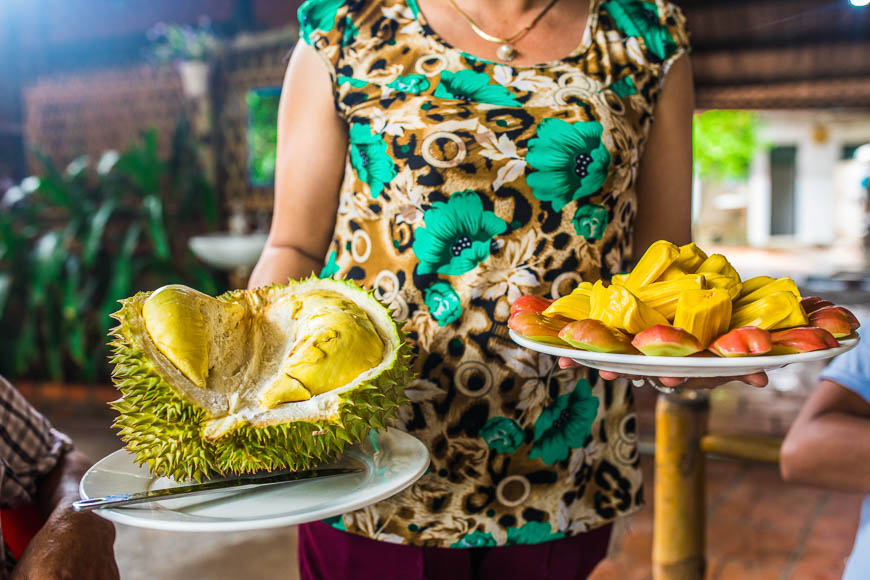
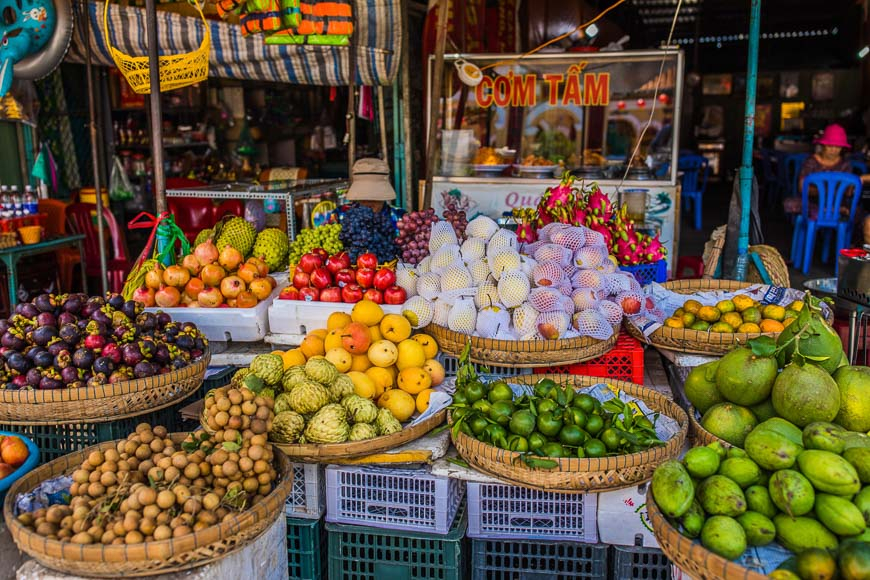
Fruit is an integral part of everyday life in Vietnam. Whether you’re strolling down a bustling street or pedaling past bicycle vendors, you’ll find signs for “hoa quả” (fruit) atop perfectly stacked pyramids of colorful fruits. In this guide, we invite you to snack happily, be adventurous, and dive into the wonderful world of Vietnam’s fruits.
Mangosteen | Măng Cụt
Easily one of the most exotic fruits you’ll taste in Vietnam, mangosteen is only in season from May until August. Even the local Vietnamese people get excited for mangosten season. With its thick purple rind and soft, tangy flesh, mangosteens are easy to find in supermarkets and street-side vendors across the country.
How to eat it
To savor the flavor of mangosteen, gently squeeze the fruit along the middle to break the skin and twist its shell apart. Pull out a pod of fruit and pop it in your mouth to unleash its unique taste! Be cautious as larger pods may contain a seed. You can enjoy mangosteen on its own or in a savory southern salad called “gỏi măng cụt.”
Star Fruit | Khế
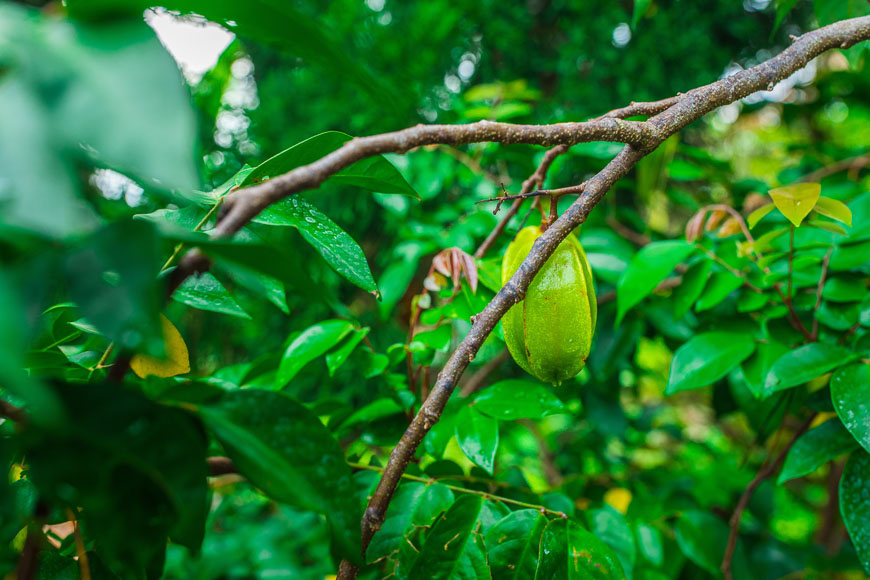
When ripe and golden, star fruit is refreshing, juicy, and a definite crowd-pleaser. Its season can be unpredictable as the trees bloom twice a year. The good news is that you can usually find this tangy delicacy year-round, though you’ll have better luck finding it in the Mekong Delta.
How to eat it
To enjoy star fruit, simply slice it horizontally to reveal perfect star-shaped snacks. As the skin is thin and waxy, it’s edible and only requires a rinse before slicing. Throughout Vietnam, star fruit is also a staple ingredient in a home-style sweet and sour fish soup called “canh chua cá.”
Rambutan | Chôm Chôm
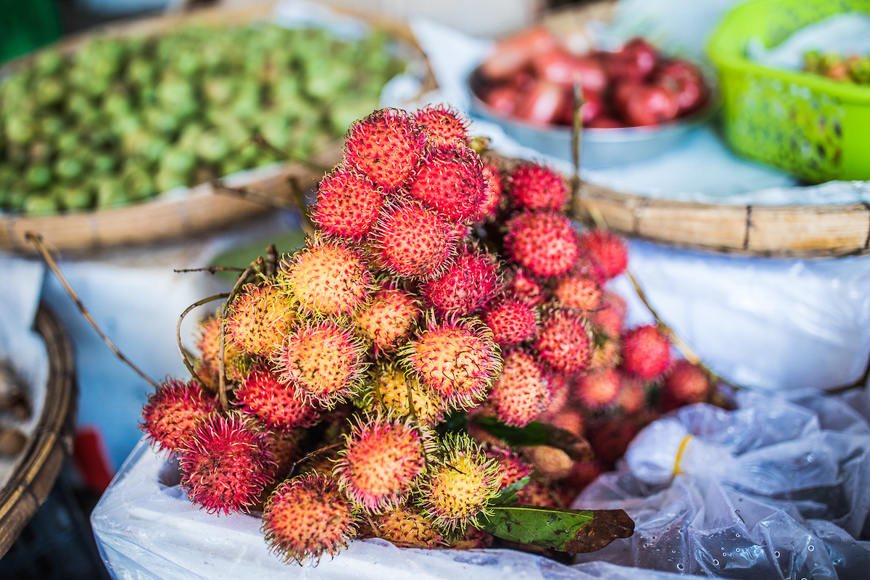
A fun way of saying “messy hair,” rambutans are as delicious as they are colorful. Their vibrant and hairy exterior hides white translucent flesh with a mild sweet and sour flavor, similar to a grape. Harvested twice each year, big bunches of these striking fruits are easy to find in both summer and winter.
How to eat it
Vietnamese people love rambutan as a healthy and refreshing snack. Give the fruit a slight pinch and twist to remove the exterior and reveal the flesh, then enjoy! If you cannot peel it, simply let it ripen a little longer.
Longan | Nhãn Lồng
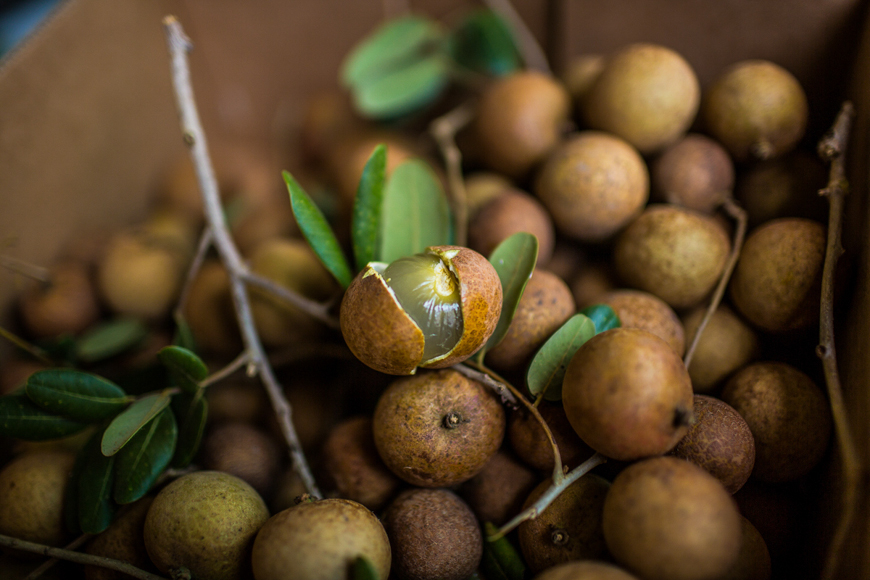
Longan is a favorite snack in Vietnam and is easily spotted in big bushels throughout the country’s many street markets. Called the “dragon’s eye” in Vietnamese, this fruit is often compared to lychee but has a slightly sweeter flavor and more flesh.
How to eat it
Peel off the thin and brittle brown skin to reveal the translucent fruit that holds a hard and shiny black seed. Vietnamese people often enjoy longan on its own with a cup of tea or in a cold sweet soup with lotus seeds called “chè hạt sen nhãn lồng” – the perfect treat on a hot summer day.
Pomelo | Bưởi
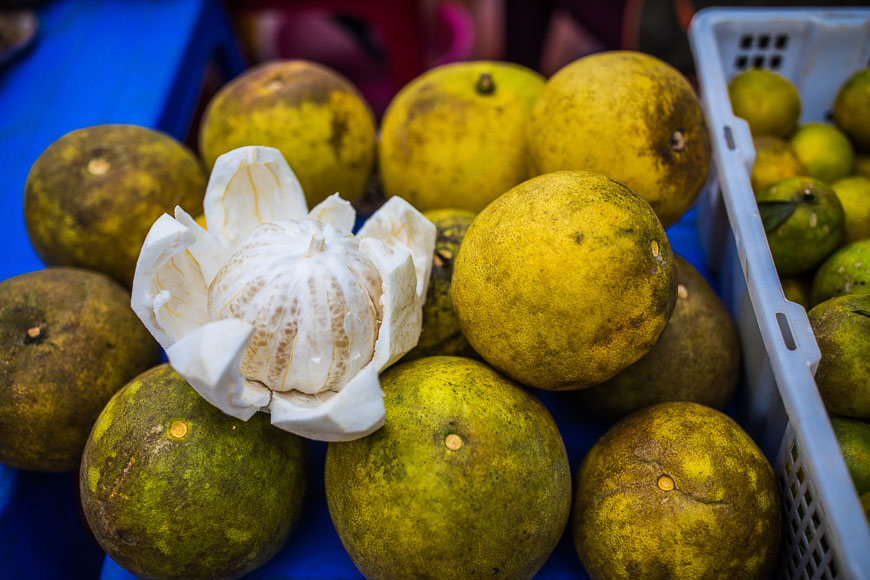
Pomelos are like grapefruit’s giant cousin but with a milder taste. While they might appear intimidating, pomelos are worth the effort. This large, slightly oblong citrus fruit is green and faintly yellow when ripe. You can find it most of the year in Vietnam and on display during special occasions.
How to eat it
Once you cut the pomelo open, you’ll see the thick white pith obstructing its pale yellow or pink flesh. Where pomelo stands out is once you peel off the bitter-tasting pith, the flesh is made up of curious little sacs filled with juice. Pomelo is a popular ingredient in Vietnamese savory salads, such as “gỏi bưởi.”
Dragon Fruit | Thanh Long
Dragon fruit, grown widely in the Mekong Delta, has a bizarre look with its thick fuchsia rind and wispy green extensions. Inside, the flesh is either white or purple, dotted with small seeds.
How to eat it
Dragon fruit is easy to enjoy: just slice it and remove the thick rind. While it has many health benefits, this cacti is actually not very flavorful and has an almost watery taste. Often enjoyed by the Vietnamese at the end of a meal, it’s a great palate cleanser.

Mangos | Xoài
Ah, mangos! These may be one of the most recognizable fruits on the list, yet they are absolutely worth a try in Vietnam. Aromatic and juicy, the Vietnamese love eating green mangoes as a snack dipped in chili salt and shredded in a savory green mango salad called “gỏi xoài.”
How to eat it
To enjoy a ripe mango, slice it around its pit with a sharp knife, then gently break the halves apart. Another method is to slice sections off around the pit and do a criss-cross cut along the skin. When you bend the peel back, the fruit will almost stand on its own, making it easy to eat off the skin.
Rose Apple | Quả Roi in the north, Quả Mận in the south
Shaped like a bell, this unusual red fruit has crispy and juicy flesh with a watery texture, much like a melon. Rose apples have tender flesh, and the flavor can be described as unripe pears with a splash of rosewater. You’ll find this refreshing fruit growing most of the year in the south of Vietnam.
How to eat it
Despite its English name, the only similarities this fruit has to an apple are how it’s eaten. You can munch around the core (just avoid the base) or slice it into quarters and dig in.
Star Apple | Vú sữa
The Vietnamese name for star apple translates to “mother’s milk” and is connected to an old folktale. This spherical fruit is roughly the size of an orange, with tight, shiny skin in shades of violet or green. The skin and rind are bitter, but the fruit inside is white with a mellow taste.
How to eat it
Grown in orchards in the Mekong Delta and Central Vietnam, there are two ways to try star apples like a local. You can cut it in half and scoop out the fruit with a spoon (be careful for large and inedible seeds), or you can press and roll it to release the juice inside and then puncture a hole in the bottom to suck out the milky juice.
Guava | Ổi
Roughly the size of a softball, this pear-shaped fruit has a bumpy exterior and light green color. Brought into Asia from Central America, guavas in Vietnam are green with white or pink flesh and have a light herbal flavor.
How to eat it
Vietnamese people love guava and will eat it ripe or unripe, cut into chunks, and dipped in chili salt. The guava’s mild and slightly acidic taste pairs well with the sharp and spicy seasoning.
Passionfruit | Chanh Leo
Purple and roughly the size of a tennis ball, passionfruit is a much-loved ingredient in Vietnamese kitchens. The seeds are edible, and the flavor is refreshing with a sharp finish. You can easily find passionfruit at street-side cafes throughout the year. Try it as a juice (nước chanh leo) or with yogurt, shaved ice, and a hint of sugar (sữa chua chanh leo).
How to eat it
The thick rind can be gently pulled apart with your hands. Inside the passionfruit, you’ll find soft yellow and orange seeds, which can be scooped out with a spoon and used to make tart and refreshing drinks.
Durian | Sầu Riêng
Durian is known worldwide for its pungent aroma, so powerful that the fruit is banned from public transport in many countries. Known as the “king of fruits,” it looks and tastes like nothing else in the world. The texture of durian is often compared to custard, and the buttery flesh melts on the tongue, leaving behind a strong flavor and fragrance that durian addicts can’t get enough of.
How to eat it
Durian is a tough fruit to crack open, both literally and figuratively. Don’t worry about asking your vendor to carve off a slice for you. Durian is also great in dishes like chè Thái, xôi sầu riêng (sticky rice with durian custard), or bánh pía, a puff pastry with a creamy durian filling.
Jackfruit | Mít
Easily confused with durian, jackfruits are similar in size and color on the outside but different once they’re open. Jackfruits can grow to be the largest and heaviest fruits in the world. The skin is covered in ridged bumps, and the flesh has a gummy texture. Jackfruit has many fans among fruit lovers who enjoy pulling apart the stringy meat by hand and savoring its sweet, delicate taste.
How to eat it
Jackfruit is the most difficult fruit to open on this list, even more formidable and messy than durian. You’ll want help to get your jackfruit open before you dig in. You can also seek out a taste of jackfruit in hoa quả dầm, a bowl of crushed ice, coconut cream, and mixed fruits.